


The FireTIR early fire detection system successfully passes the Technical Suitability Assessment (ETI) carried out by Applus, a body authorised by the Spanish Ministry of Industry, thus obtaining approval under the RIPCI (Spanish Fire Protection Installations Regulation)
The VisionTIR team, a Spanish manufacturer of thermography-based surveillance and control solutions, has one more reason to feel especially proud. And rightly so.
Last February, Applus, the assessment body approved by the Spanish Ministry of Industry, issued a favourable Technical Suitability Assessment certificate recognising FireTIR as a fire detection and alarm system.
This approval, always in accordance with the requirements set out in the RIPCI, means the recognition of FireTIR as an effective fire protection system, which undoubtedly brings a number of advantages for customers and users.
Advantages of having a RIPCI-approved fire protection system
Installing a fire protection system such as FireTIR, which complies with the RIPCI (Spanish Fire Protection Installations Regulation), provides a number of advantages.
The most relevant include the following:
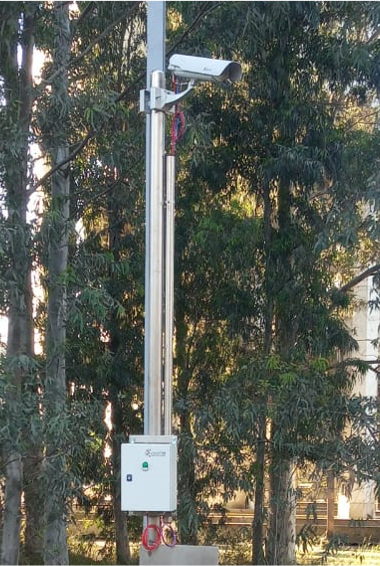
FireTIR system at a biomass plant
- Enhanced safety: Systems that comply with the RIPCI are designed to prevent and control fires effectively, increasing the safety of people and property in an emergency.
- Regulatory compliance: Complying with the RIPCI means meeting the legal requirements established by the competent authorities, avoiding penalties and possible legal liabilities.
- Reliability and guarantee: Having a fire protection system that complies with the RIPCI gives owners, facility managers and occupants peace of mind, knowing that they are properly protected against possible emergencies.
- Lower fire insurance premiums: Complying with the RIPCI is a seal of reliability that will not go unnoticed by insurance companies, which reward customers who implement approved fire protection systems, especially thermography-based early warning systems, with significant premium reductions.
The FireTIR Technical Suitability Assessment (ETI) process
To complete the Technical Suitability Assessment with a favourable result, VisionTIR’s engineering team, together with the Applus assessment team, successfully carried out each of the 4 phases of the certification process to ensure that the FireTIR System, as an innovative detection system, meets the requirements of the RIPCI.
Phase 0: Study of FireTIR’s performance and features, as well as the regulatory and technical requirements needed to comply with the RIPCI.
Phase I: Resistance and ageing tests of the FireTIR system, as well as all the tests needed to certify its reliability in fire detection and alarm.
Phase II: Assessment of FireTIR’s components and performance, according to the requirements and tests carried out respectively.
Phase III: Inspection and assessment of the FireTIR system’s manufacturing process and internal quality controls.
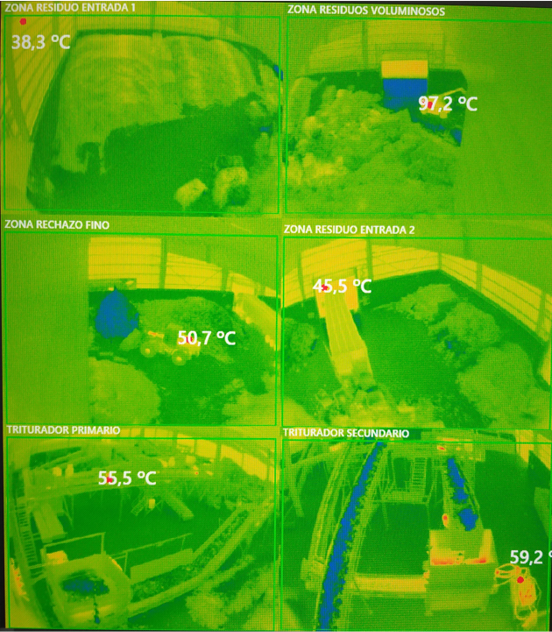
Monitoring of a waste sorting plant.
Certified thermography system: a unique solution that outperforms the rest

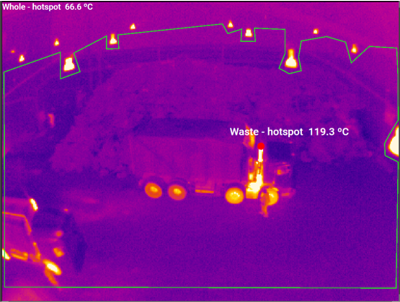
Monitoring of a waste unloading area.
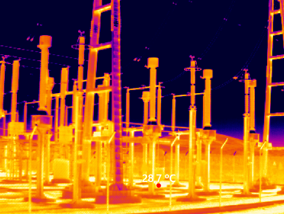
Solar farm monitoring
In a fire, as in any emergency, time is the crucial factor that makes the difference between an incident with barely any damage and a devastating catastrophe with unpredictable consequences for the company and its people.
Therefore, the quality of a fire protection system is measured not only by its detection capability, but by how early it raises the alert.
Thanks to the RIPCI Technical Suitability Assessment, the FireTIR early fire warning system takes a giant step forward by going from being a complementary system to other fire protection systems to becoming a main or sole fire detection and alarm system.
This new status of FireTIR as a sole system brings a double benefit:
On the one hand, a simplification of fire protection systems with the resulting infrastructure savings and, on the other, having the most effective solution with the earliest detection and alert currently available on the market.